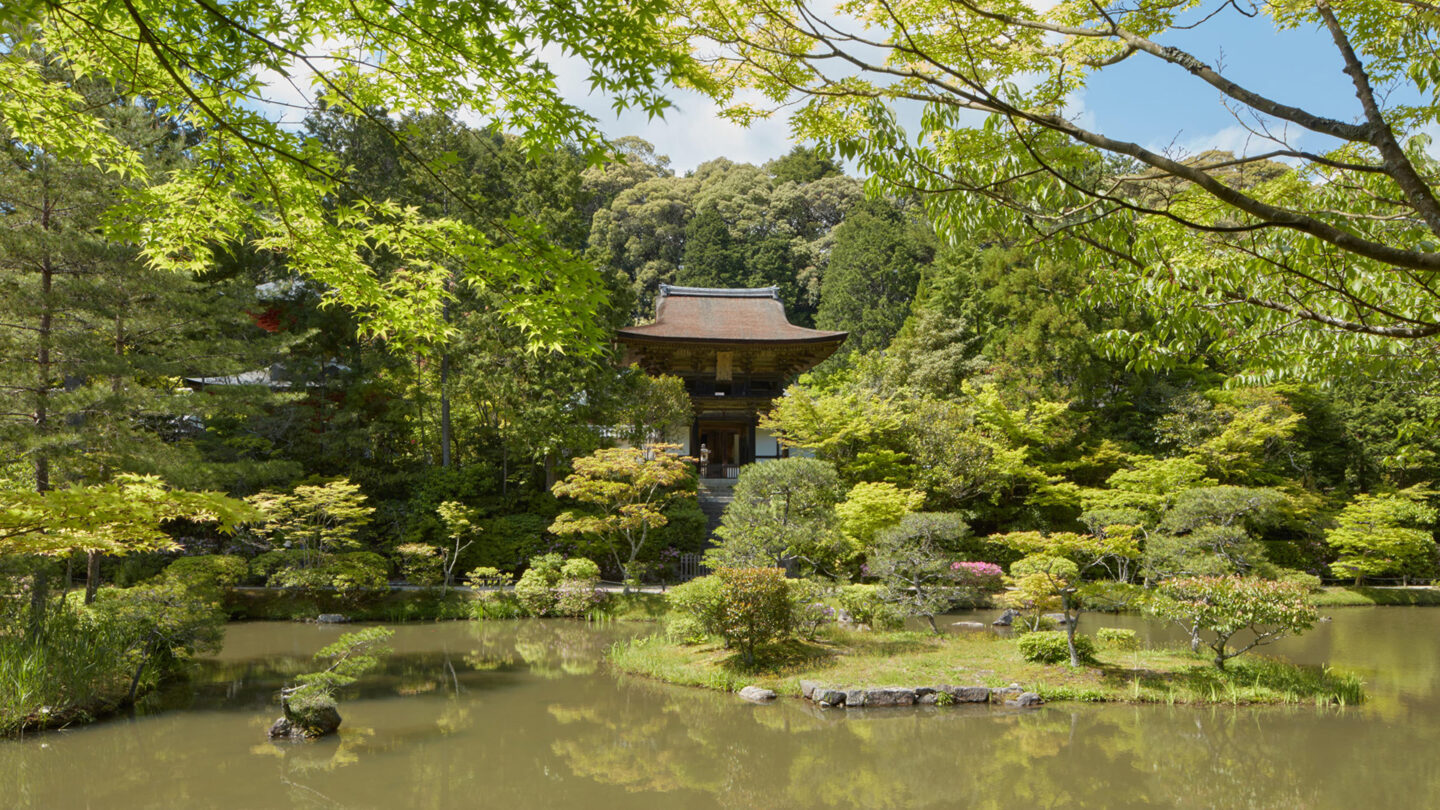
Enjōji Temple has stood in the mountains of eastern Nara for over 1,000 years.
Its grounds contain many important cultural assets
that have survived centuries of turbulent history,
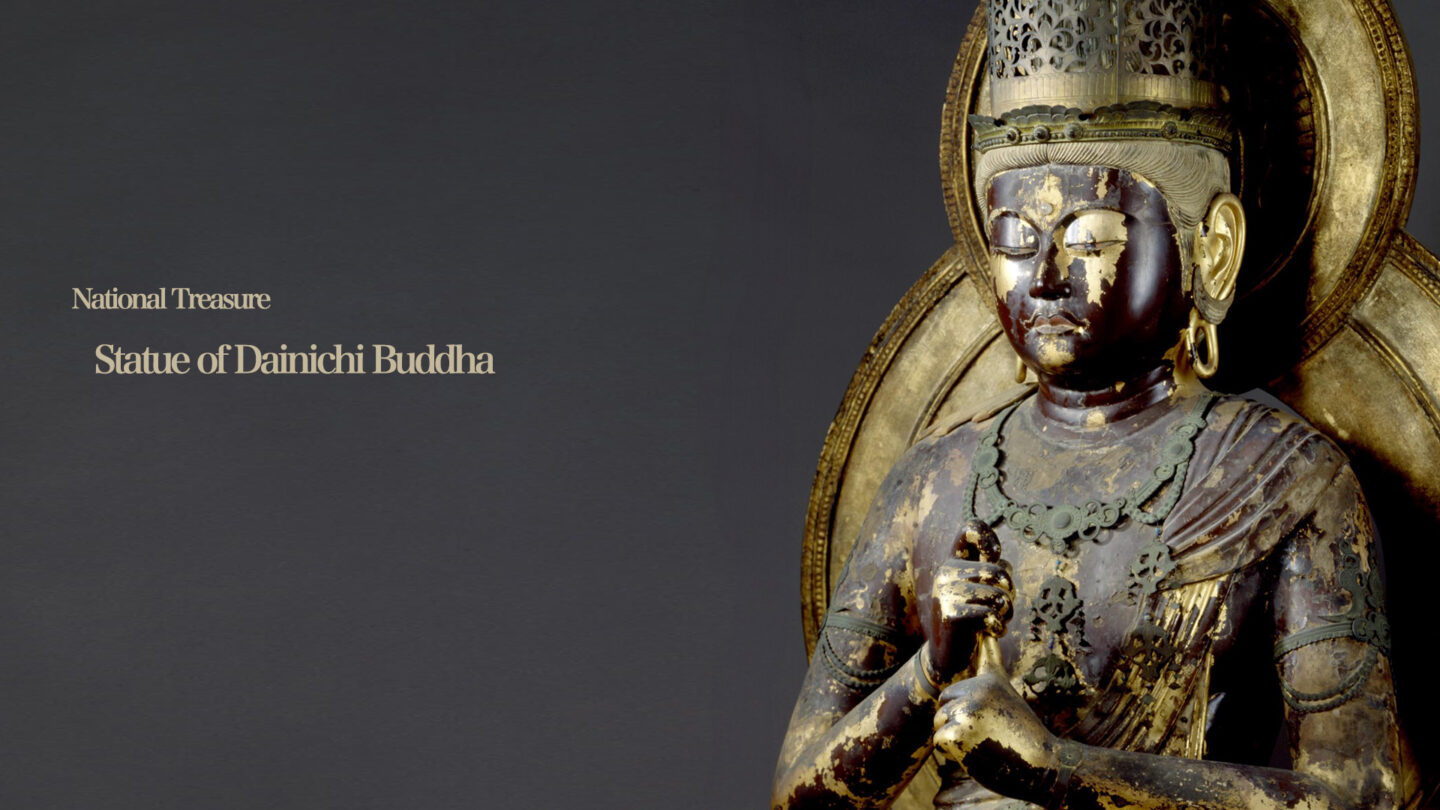
including a statue of Dainichi Buddha
by the master sculptor Unkei (ca. 1150–1223).
Traversing Centuries of Violence
Enjōji’s principal deity was initially Kannon, the bodhisattva of compassion. However, in the early twelfth century, the temple transferred that role to Amida Buddha. With war, famine, and natural disasters sweeping across Japan, people began to fear the world was ending. Invoking Amida’s name was believed to guarantee rebirth in the Pure Land, and many turned to him for salvation. Accordingly, the deity took on a more prominent role at Enjōji.
Fighting that broke out in Nara in 1466 due to a shogunal succession dispute led to widespread fires, and Enjōji was burned to the ground. Fortunately, the temple had been warned of the escalating conflict and was able to relocate its Buddhist statuary to safety. Enjōji was quickly rebuilt to its former glory, and the statuary was returned soon after.
The temple again encountered peril in the 1860s, when the newly established central government ceased funding for Buddhist institutions and extremists began to vandalize or even destroy temples they decried as sources of “foreign” religion. Enjōji was forced to function on a reduced scale, but many of its historic structures survived.
A Wealth of Cultural Treasures
In the face of these hardships, the monks of Enjōji have worked tirelessly to preserve the temple’s statuary and landscape.
Today, Enjōji is famous for its statue of Dainichi Buddha. Designated a National Treasure, it is the earliest known work by Unkei, one of Japan’s most celebrated Buddhist sculptors. The statue was completed in 1176 and enshrined in the temple’s Tahōtō Pagoda. In recent years, it was relocated to Sō-ōden Hall for preservation and is available for public viewing.
Enjōji’s Main Hall enshrines other treasured Buddhist statuary, including statues of Eleven-Headed Kannon and Amida Buddha, the temple’s former and current principal deities, respectively.
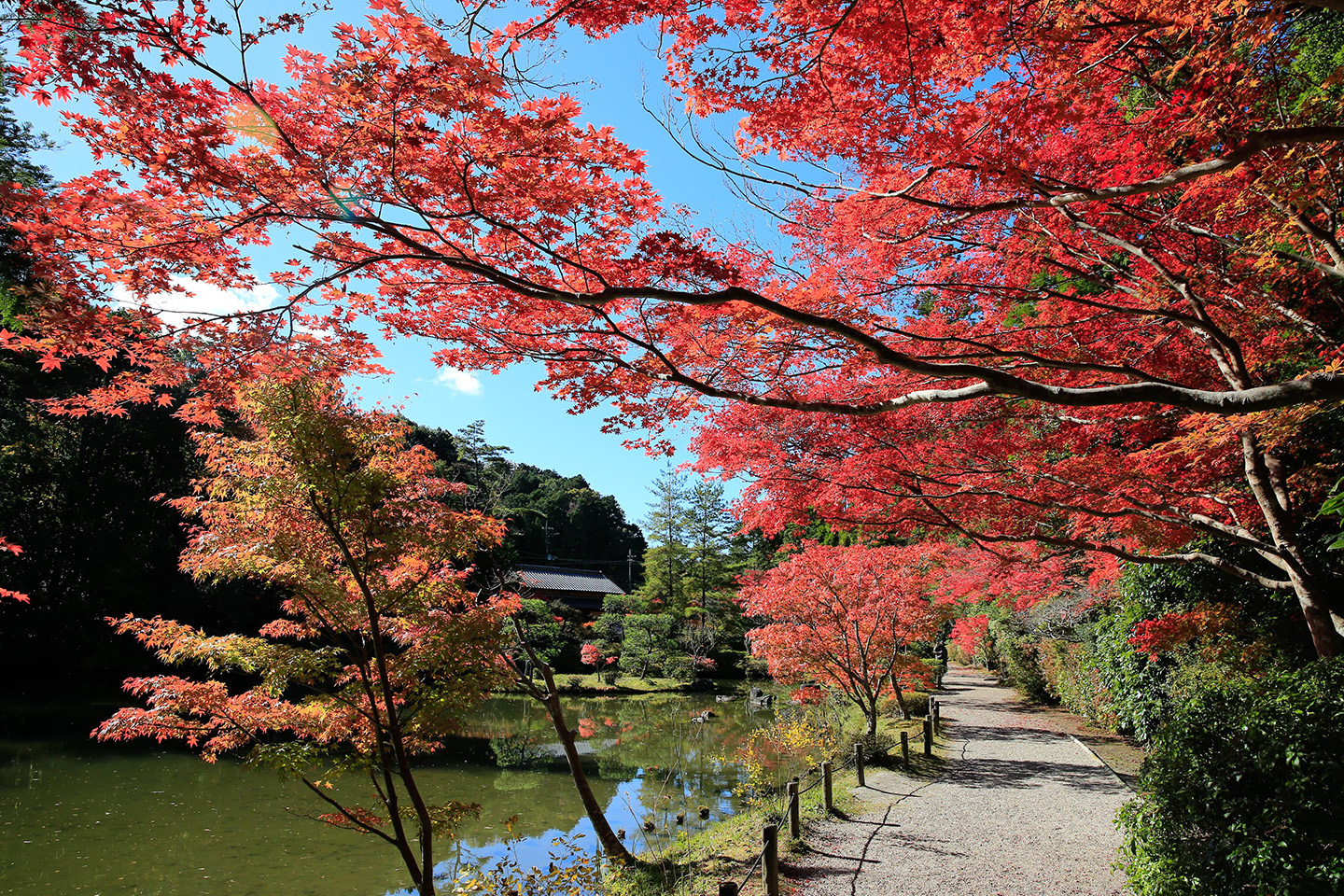
Enjōji’s traditional Japanese garden is one of few remaining examples of the shinden-style gardens that were popular in the Heian period (794–1185). These spacious gardens were common in aristocratic residences and featured a large, central pond fed by artificial streams from the northeast. The pond usually contained small islands that were accessible by bridges on the north and south sides. Although the bridges have since been removed, Enjōji’s garden closely retains this layout.