Temple Grounds Guide
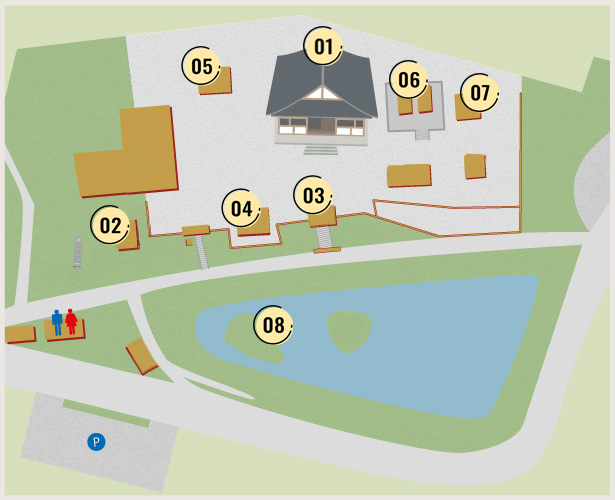
01.Main Hall
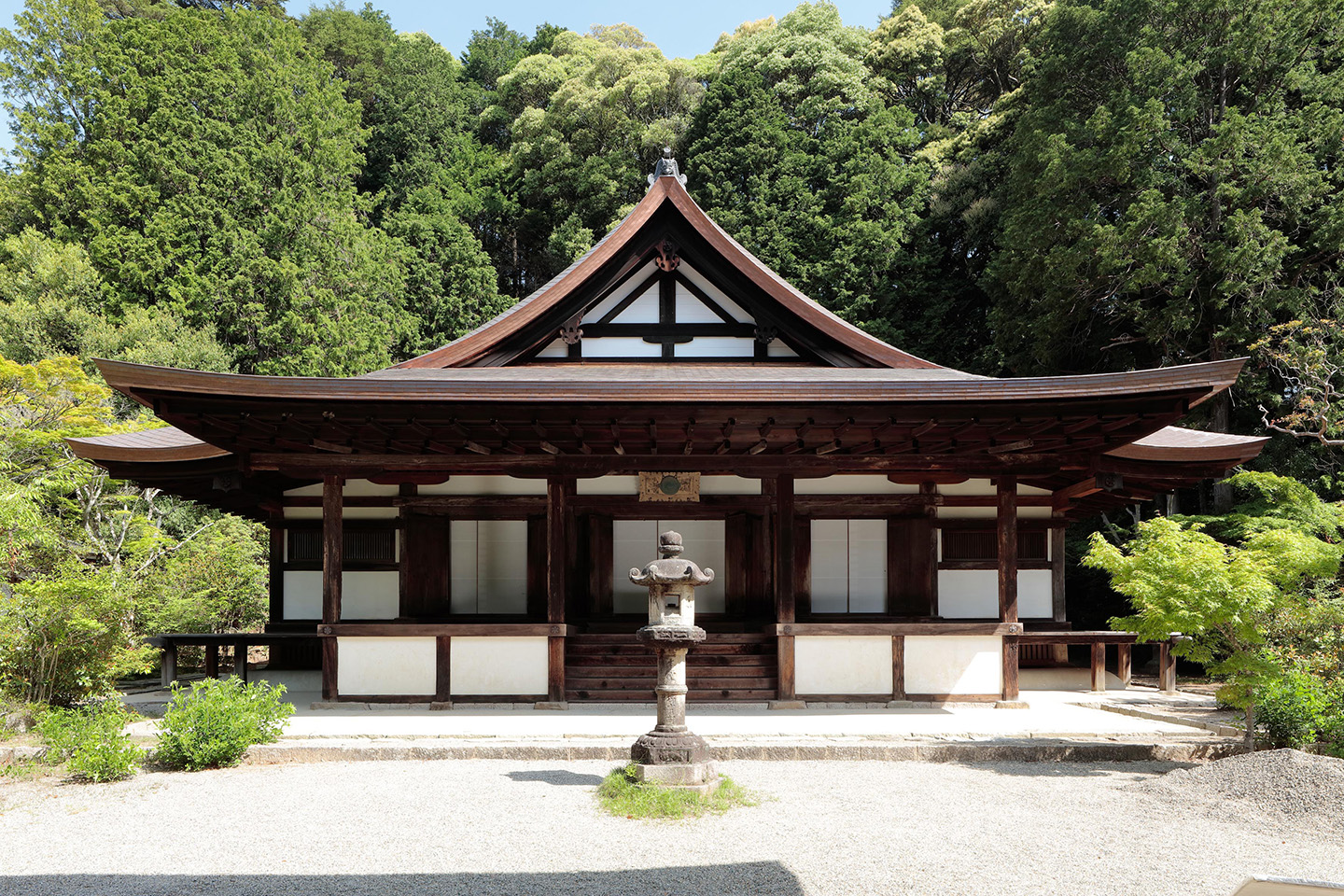
The Main Hall was destroyed by fire in 1466, when succession disputes between warrior families of the shogunal regime turned violent. The hall was soon rebuilt in the exact style and size as the original from the late Heian period (ca. 1000–1100).
Inside the Main Hall is Enjōji’s principal image, a statue of Amida Buddha that dates to the twelfth century. Surrounding the statue are four pillars decorated with the retinue of bodhisattvas who, together with Amida, greet the recently departed and escort them to the Pure Land. The lotus-like decorations at the base of the pillars are said to be remnants from the original hall.
The hall’s spacious design allows temple-goers to perform jōgyō-zanmai, a form of prayer in which practitioners circle the hall for three months while chanting Amida’s name. The recitation of Amida’s name is believed to guarantee rebirth in the Pure Land, a paradise realm free of suffering. The surrounding rooms contain Buddhist statuary, including an Eleven-Headed Kannon, which was the temple’s original principal image, as well as various other artifacts and historical records.
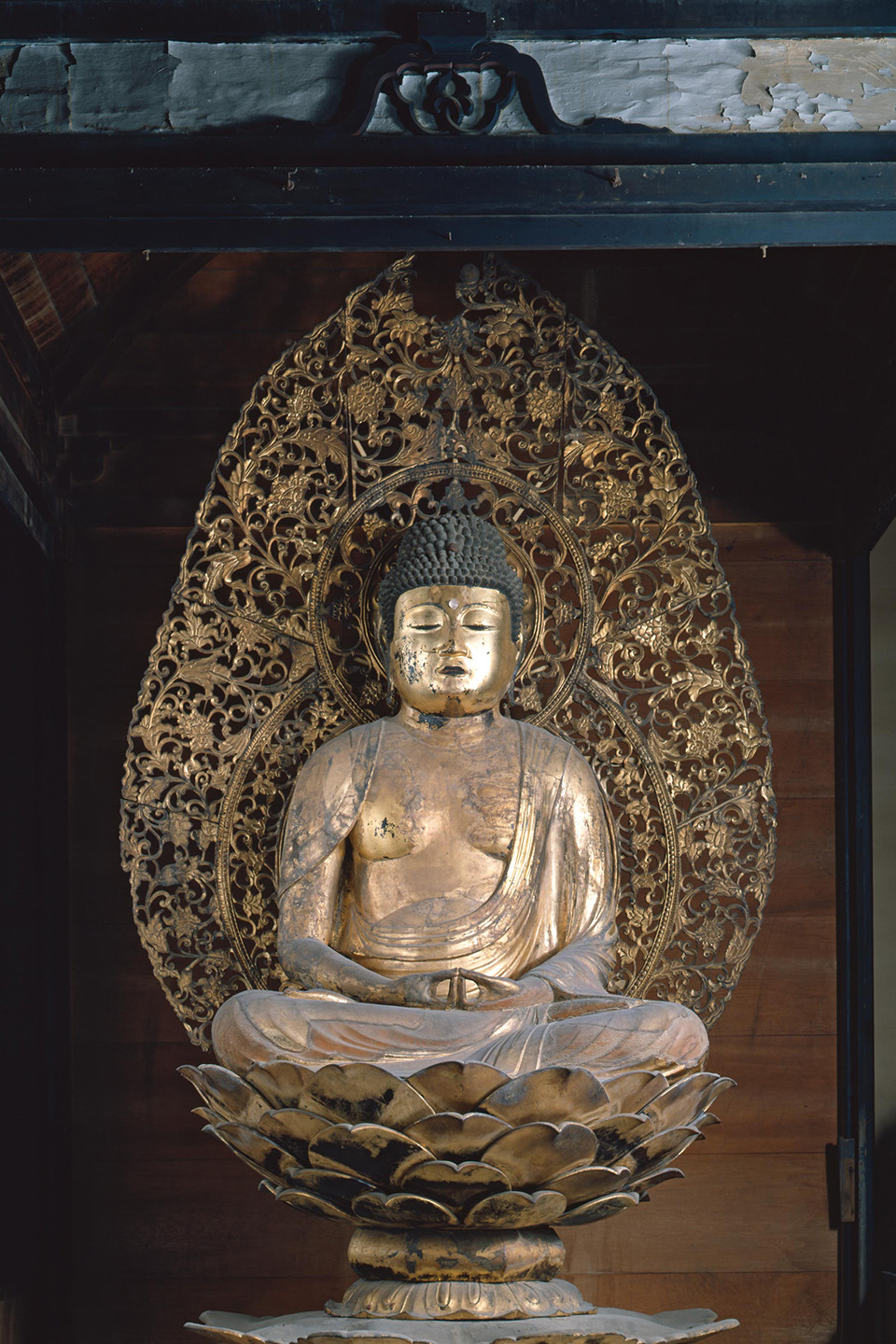
This statue of Amida Buddha has been the principal image of worship at Enjōji Temple since 1112. Amida is a widely venerated savior figure said to guarantee rebirth in the blissful Pure Land for those who invoke the deity’s name.
The soft lines of the body, the tranquil expression, and the delicate, childlike face of this Amida exemplify the style of statuary that was dominant in the late Heian period (ca. 1000–1100). The hands form the meditation mudra, which symbolizes the triumph of enlightenment over illusion. Amida’s half-closed eyes look slightly downward, indicating that the deity has descended to greet the deceased and escort them to paradise.
The statue is backed by an intricate openwork mandorla that symbolizes light radiating from Amida. Late-Heian mandorlas are quite rare, and very few survive in such pristine condition. The statue is enshrined in a large, three-sided cabinet modeled on the Japanese imperial throne, an unusual feature for a Buddhist temple.
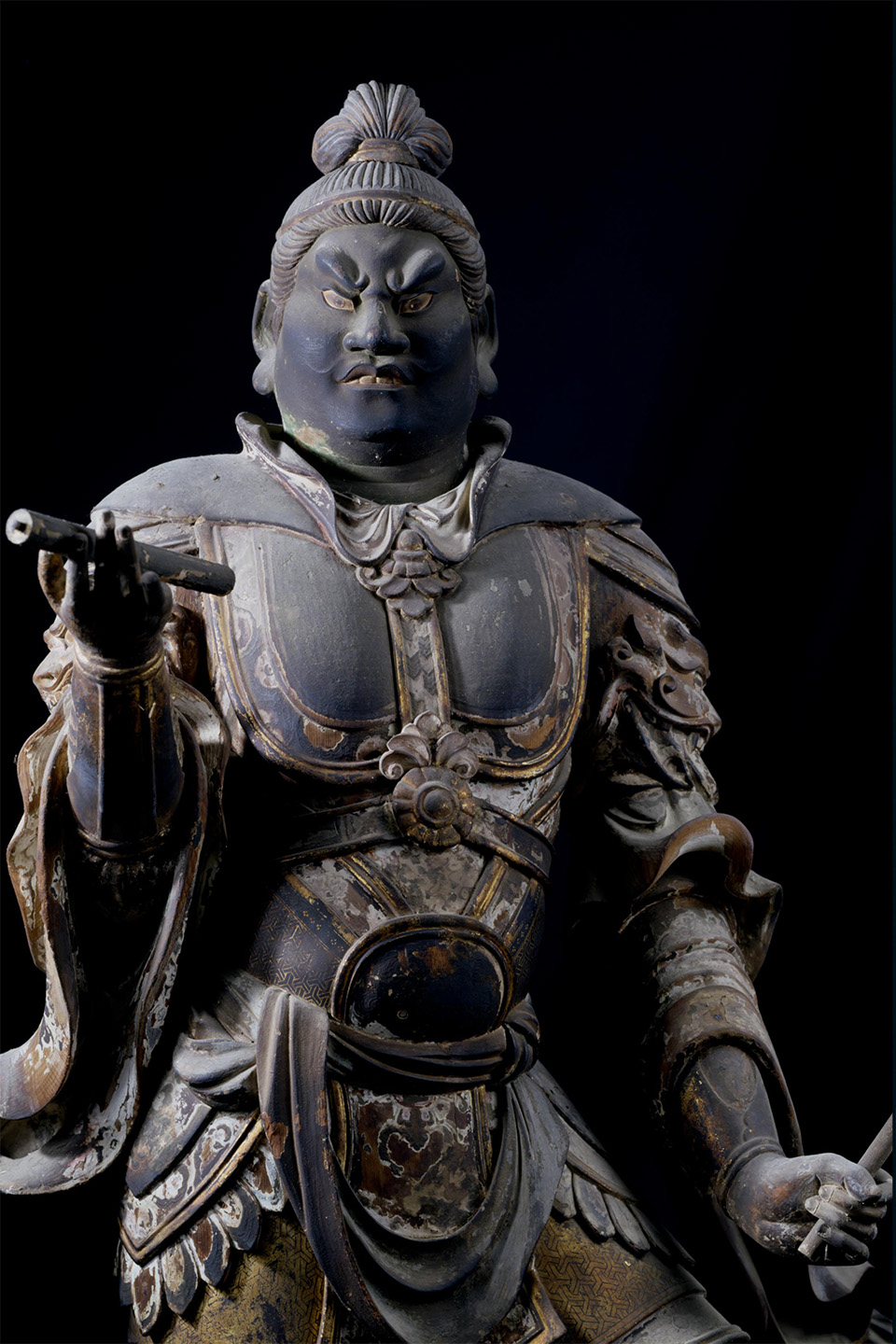
Surrounding Amida Buddha are the Four Heavenly Kings, guardians of the four cardinal directions. Generally depicted in armor and carrying weapons, these deities are believed to ward off evil and can be found at most Buddhist temples in Japan. Their fearsome faces and dynamic poses emphasize their protective role and distinguish them from the more serene-looking statues of buddhas and bodhisattvas.
These figures are made of Japanese cypress. The dynamic twisting of their torsos and the detailed folds and patterns of the armor display the realistic style of the early Kamakura period (1185–1333). The statues were originally colored from head to toe with brilliant pigments, traces of which are still visible.
The statue of Jikokuten dates to 1217. Jikokuten is the King of the East and stands on Amida’s left, in front of the other guardians. The statue’s powerful features suggest it was carved by a student of the Kei school, and it is thought to be the work of Kōshō (dates unknown), the fourth son of the master sculptor Unkei (ca. 1150–1223).
02.Sououden
National Treasure
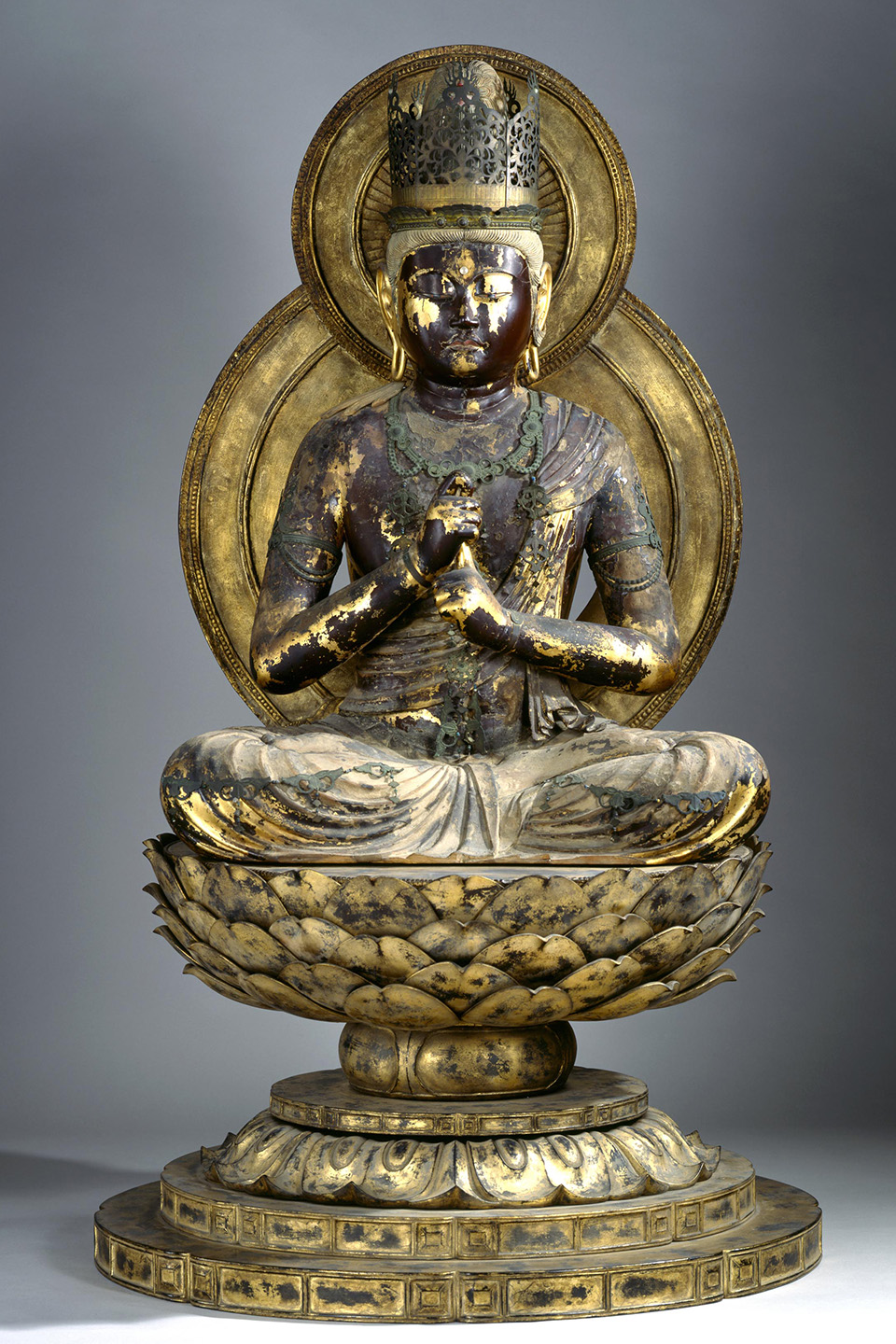
This statue of Dainichi Buddha is the earliest known work by the master sculptor Unkei (ca. 1150–1223). An inscription on the statue’s base reveals that it was commissioned on November 24, 1175 and completed on October 19, 1176. Unkei would have been around 25 years old, and the amount of time he devoted to the work and the unusually detailed inscription indicate the sculptor’s enthusiasm for what was likely his first commissioned statue. His work was apparently well-received, because the inscription states he was paid with 43 rolls of fine silk.
The statue displays aspects of the realism that came to define Unkei’s artistic style, such as a full and supple body that communicates a sense of vigor. The eyes are made of crystal and appear to shine in the light. The hands form the “knowledge-fist” mudra, which symbolizes the sharing of the Buddha’s wisdom with all living beings.
Buddhas are usually depicted in simple robes like those worn by Shakyamuni, the historical Buddha. Dainichi, however, has lavish jewelry, including a crown, necklace, and arm bands. These ornaments are attributes of ancient Indian royalty. This difference in attire is believed to indicate Dainichi’s special position in Shingon Buddhism as the Cosmic Buddha, who oversees all realms of existence and represents the truth of the universe.
03.Rōmon Gate
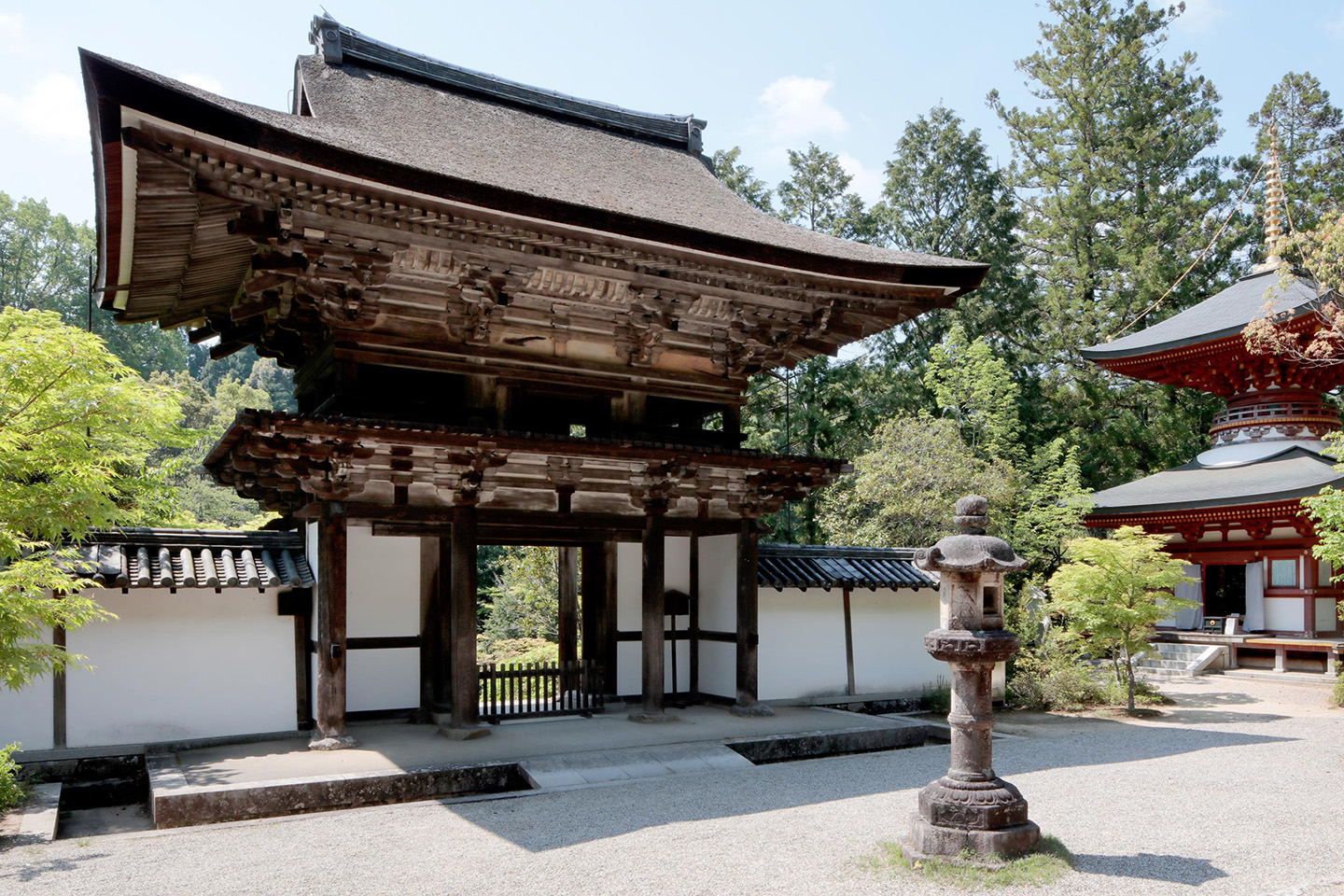
This gate was erected two years after the original gate burned down, along with most of Enjōji Temple, due to fighting in 1466. It has the false second story that distinguishes a rōmon gate, but it lacks several other typical features, such as a decorative balcony, doors, and latticed windows. Although rōmon gates are generally painted vermilion, this gate retains the natural color of its cypress bark.
Notice the ornate hanahijiki brackets directly above the entryway on either side. Such brackets came into use in the late Kamakura period (1185–1333) and are often decoratively carved. The bracket seen from inside the temple is carved with lotus flowers, while the one seen from outside features a peony topped with a sacred wish-fulfilling gem. The meticulous detail of these carvings testifies to the skill of the artist and the grand vision of the restored gate’s design.
04.Tahōtō Pagoda
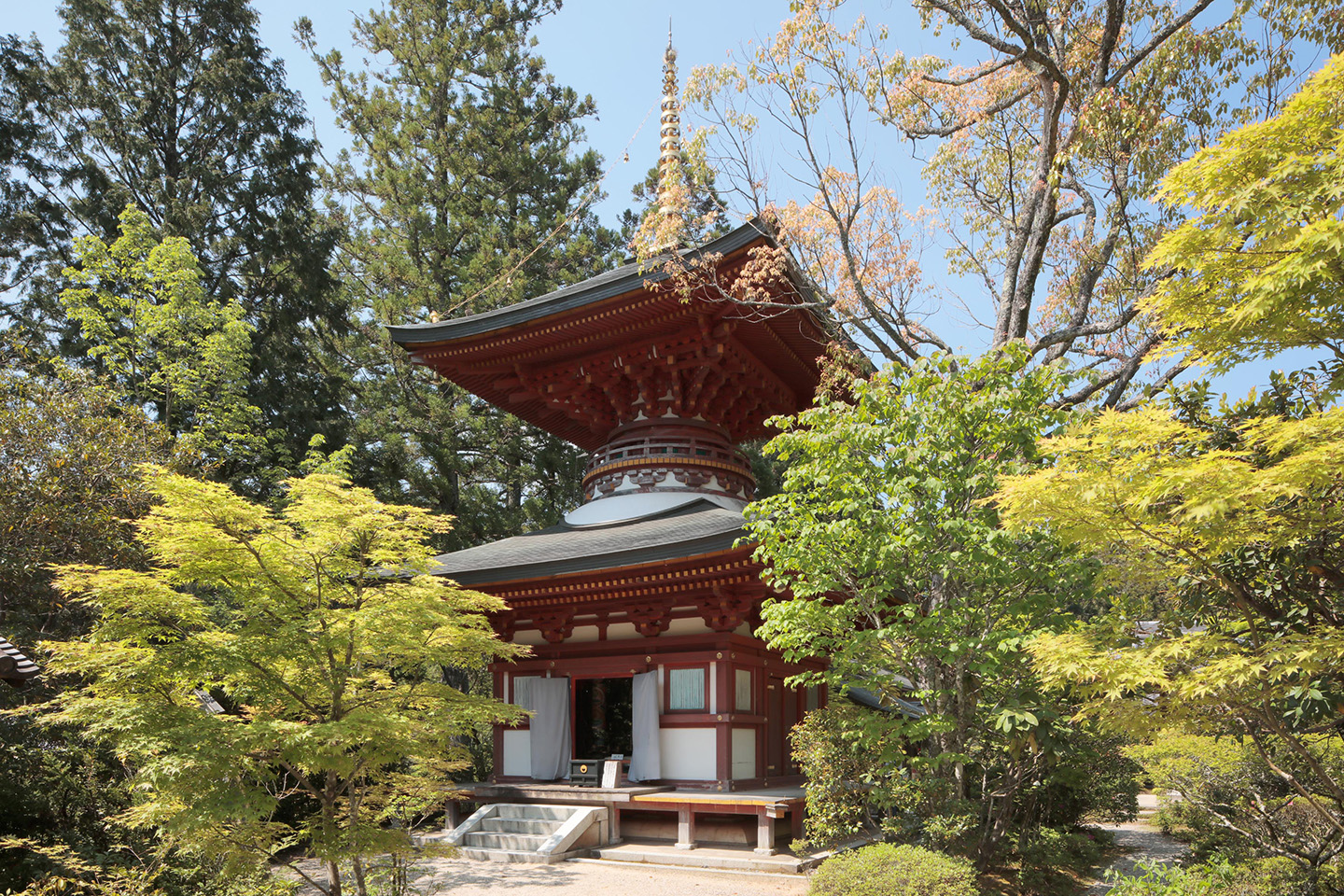
This is a tahōtō (literally, “many-jeweled pagoda”), a two-story structure found at many Esoteric Buddhist temples. In approximately 1176, the pagoda was built to enshrine a statue of Dainichi Buddha by the master sculptor Unkei (ca. 1150–1223). Unkei’s original statue was designated a National Treasure in 1993 and moved to Sō-ōden Hall for preservation. This pagoda displays a faithful replica sculpted by Fujimagari Takaya (b. 1982), a graduate student from the Tokyo University of the Arts.
Although only a few decades old, Fujimagari’s statue was made using the same historical techniques and tools as the original. Buddhist statues are often thought of as plain and austere, but this statue’s rich and colorful ornamentation challenges that idea.
This Tahōtō Pagoda is the structure’s third iteration. The first was destroyed by fire in 1466, and the second was moved to Chōjuji Temple in Kamakura in 1920. This pagoda was built in 1990.
05.Goma Hall
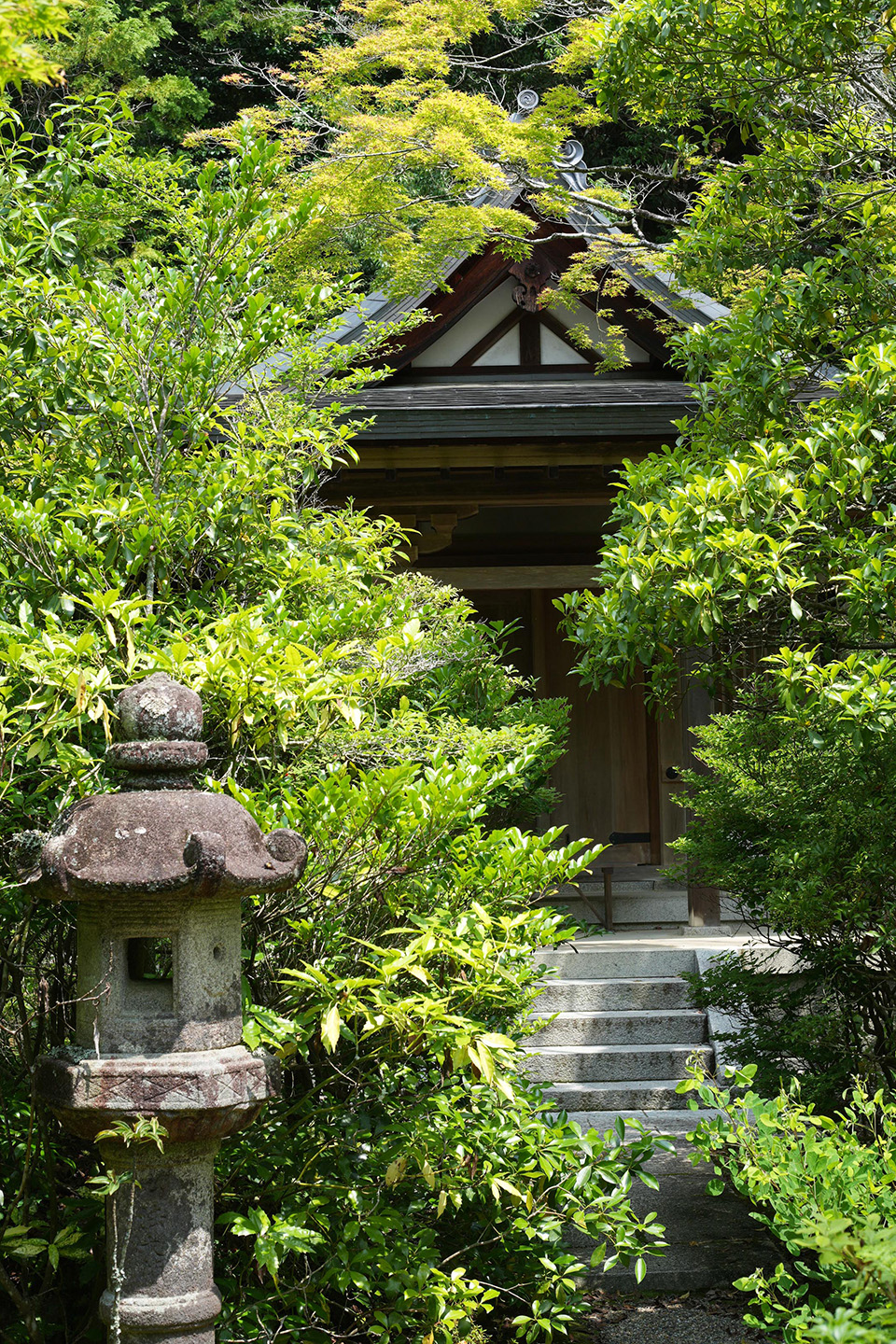
This hall is dedicated to goma, an ancient Indian fire ritual practiced in Esoteric Buddhist sects. Here, monks burn wooden tablets inscribed with prayers, ritually symbolizing the burning of defilements and negative emotions that poison the mind.
Inside the hall are statues of three significant figures: Kūkai (774–835), the founder of Shingon Buddhism; Monju, the bodhisattva of wisdom, depicted as a monk; and Fudō Myō-ō, the Immovable Wisdom King.
The statue of Monju on the left was originally in Enjōji Temple’s refectory, where the monks ate their meals. The image served as a daily reminder of the ideals each monk should aspire to. Fudō Myō-ō is in the center, and he is depicted surrounded by the purifying flames of wisdom that extinguish evil and worldly desires.
Like many other Shingon temples, Enjōji holds a goma ritual on the 28th of each month, a day associated with Fudō Myō-ō.
06.Kasuga and Hakusan Shrines
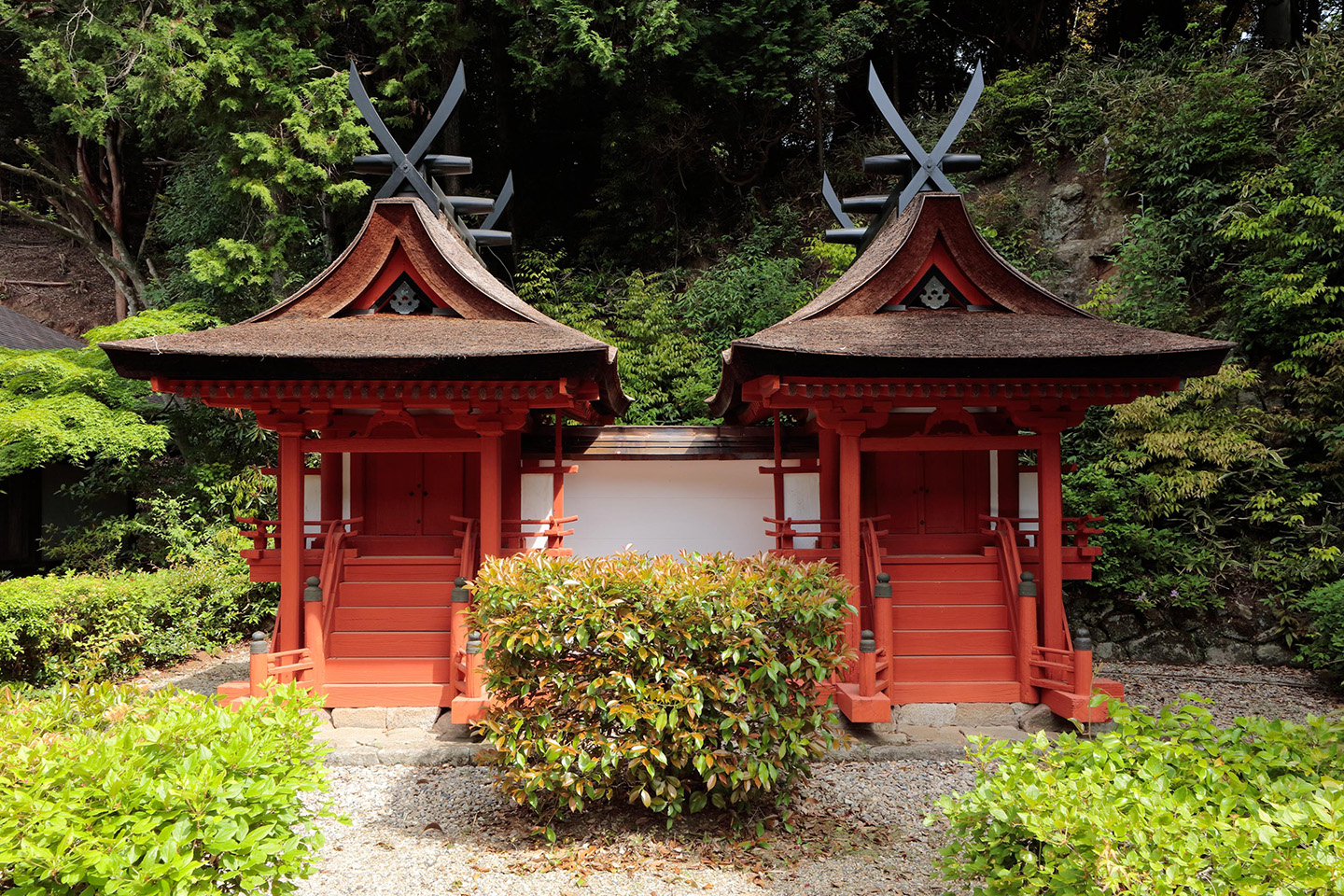
National Treasure
These small shrines were once part of Kasuga Taisha Shrine, in central Nara. The inner sanctuary of Kasuga Taisha is ceremonially rebuilt every 20 years, and the old structures are donated to nearby shrines and temples. This tradition has continued for over 1,000 years.
The Kasuga shrines at Enjōji Temple are the oldest examples of these donations and of the kasuga-zukuri architectural style. Kasuga-zukuri emulates structural features found at Kasuga Taisha, such as large gable roofs bearing wooden ornaments in a distinctively curved cross shape. Having been relocated from a Shinto shrine, the structures are themselves shrines to Shinto deities who protect Enjōji. It is not unusual to see markers of Shinto elements at Buddhist temples, as the two religions have shared a close relationship for most of Japan’s history.
The shrine on the left is dedicated to Kasuga Daimyōjin, representing five Shinto kami enshrined at Kasuga Taisha. The shrine on the right venerates Hakusan Daigongen, who is believed to reside on Mt. Hakusan, one of Japan’s most revered mountains.
Wooden plaques discovered inside the shrines record the earliest repair work as having been completed in 1494. This information, coupled with stylistic analysis of the architecture, suggests the shrines were first constructed in the early Kamakura period (1185–1333).
07.Ugajin Shrine
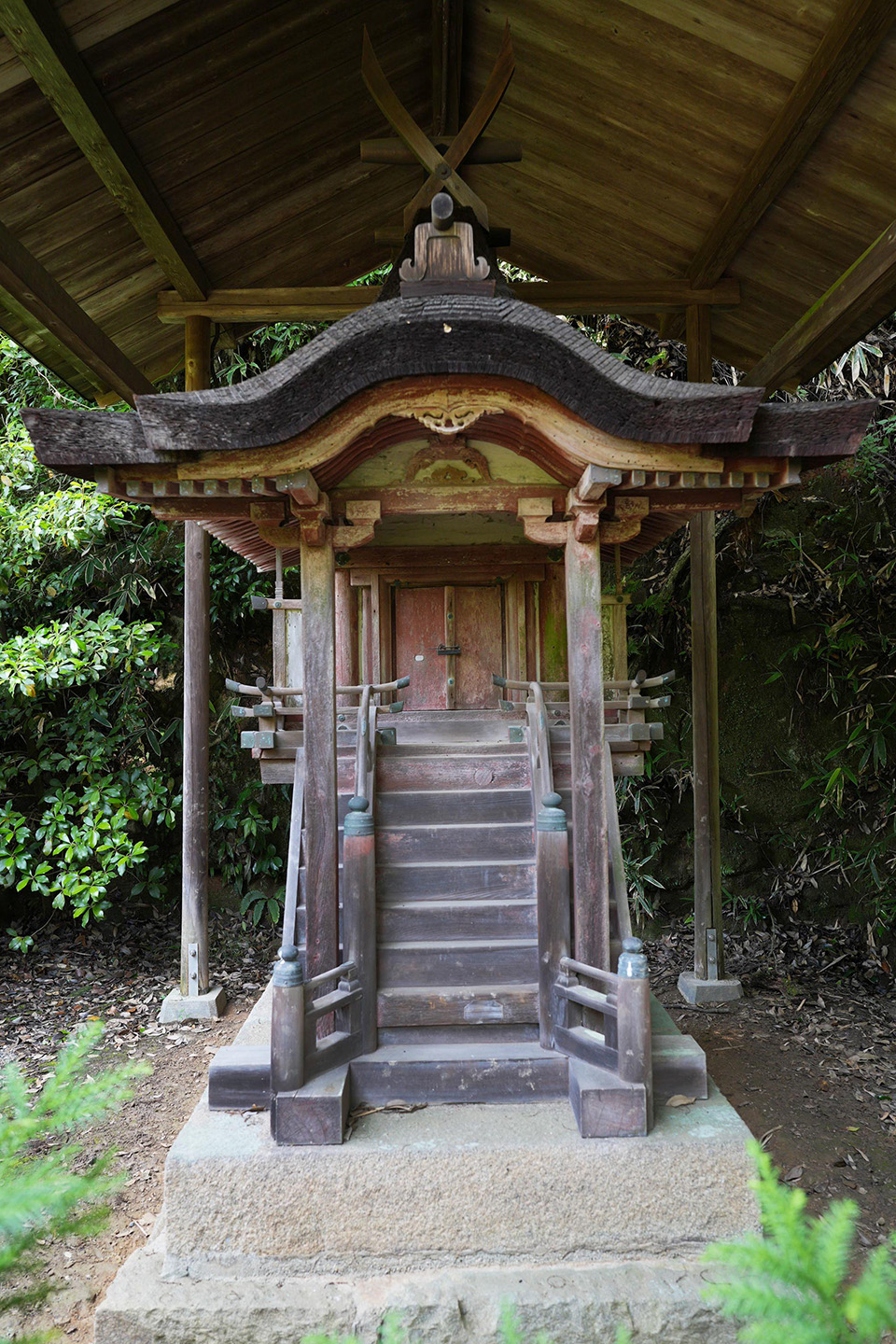
This shrine venerates Ugajin, an ancient Shinto deity associated with agriculture and prosperity, and Benzaiten (Sk. Sarasvati), a Hindu river goddess associated with music and the arts. Ugajin is depicted as a white serpent with a human head, and white snakes are considered sacred messengers of Benzaiten. Together, Ugajin and Benzaiten are venerated as the syncretic Shinto-Buddhist deity Uga Benten (or Uga Benzaiten).
Like the nearby Kasuga and Hakusan Shrines, this shrine resembles the buildings of Kasuga Taisha Shrine, in central Nara. But unlike the other two shrines, the bargeboard on its roof curves in the center before straightening at the ends. This elegant style is known as karahafu (literally, “Chinese-style gable”) and was popularized in the Kamakura period (1185–1333). It is the oldest example of a karahafu roof in Nara Prefecture.
08.Enjōji Temple Garden
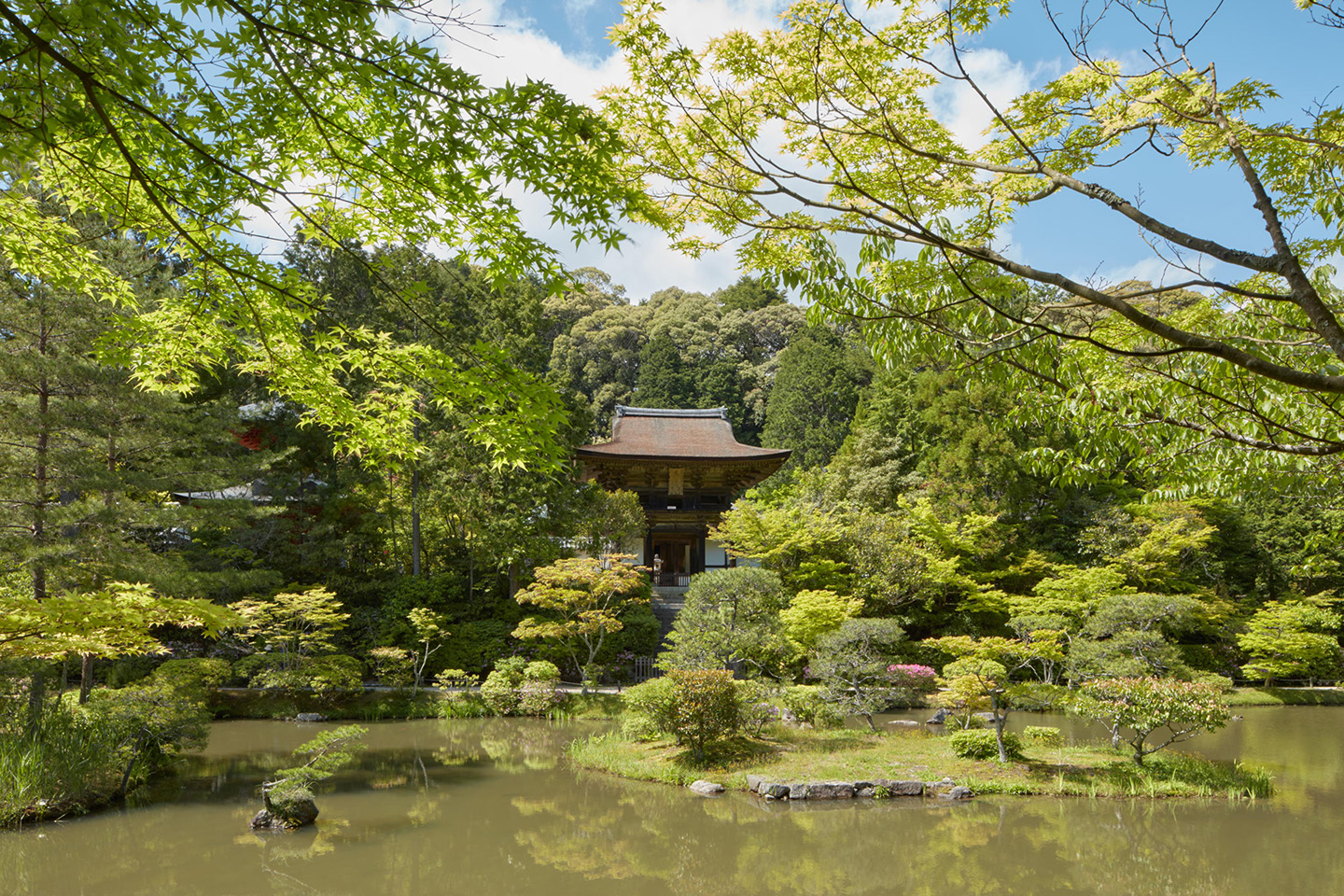
Enjōji’s historic garden offers a valuable look into the aesthetic tastes of twelfth-century aristocrats. The garden was designed by the monk Kanpen (1100–1166), who is said to have modeled its layout on the Sanskrit seed syllable vaṃ (Jp. ban). This syllable comprises a dot and curved line atop a shape that resembles a reversed p. It represents Dainichi, the Cosmic Buddha and the primary deity of Shingon Buddhism.
Shinden-style gardens like this one were common fixtures of aristocratic residences in the Heian period (794–1185), but few examples survive today. Enjōji’s garden features an artificial stream that runs into a large central pond with several small islands. The largest island was once accessible by two vermilion arched bridges that connected it to the shore on the north and south sides.
Unfortunately, the garden’s natural scenery was marred when the pond was filled in and bisected by a prefectural road in the early Meiji era (1868–1912). Nearly a century later, the road was moved farther south, and in 1975, the pond was finally excavated and restored to its original appearance.